AQtive Guard AI-SPM

Secure AI from code to production

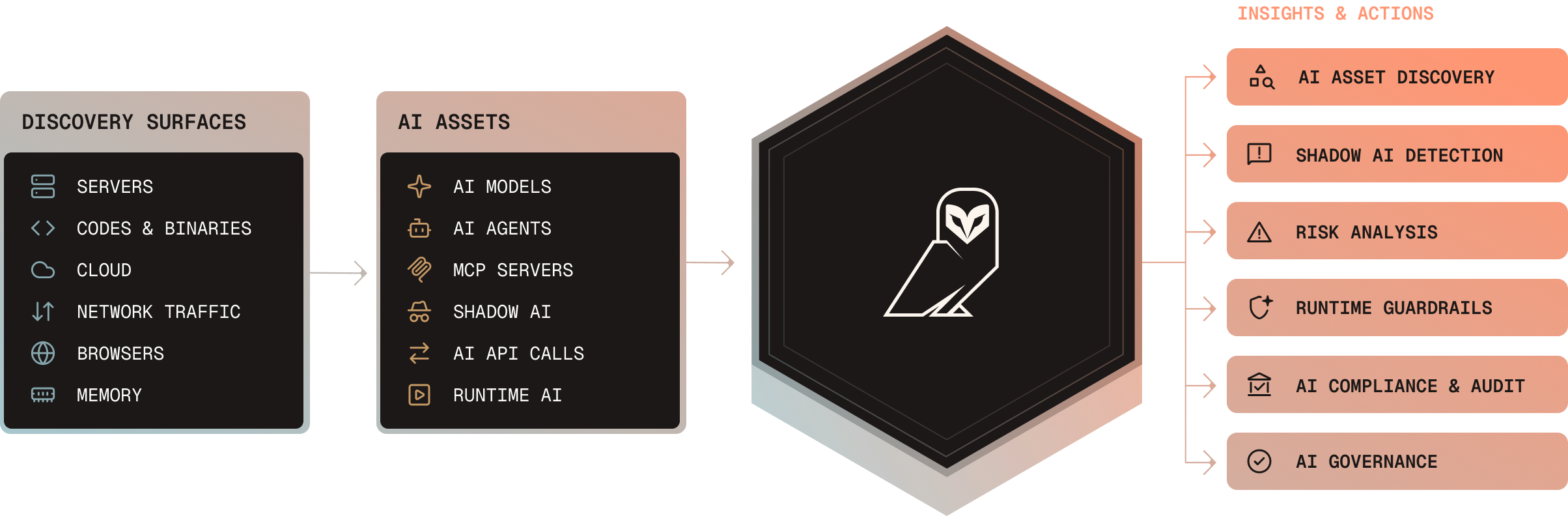
Inspect and secure code, cloud, and applications to uncover Shadow AI hidden deep in your stack, from code to compiled production.

Diagram showing a central cube linked to four icons labeled Code, Binaries & Runtime, Cloud, and Traffic & Payloads, above four layered panels labeled Discover, Analyze, Protect, and Govern.

See the entire picture. Uncover hidden AI activity and reduce risk.

Continuous discovery. Analyze, protect, and govern your AI assets from models and agents to MCP servers.

Learn more about AI-SPM

Total attack surface visibility

Eliminate Shadow AI. Automatically inventory assets embedded in compiled code, files, and applications to secure the hidden attack surface.

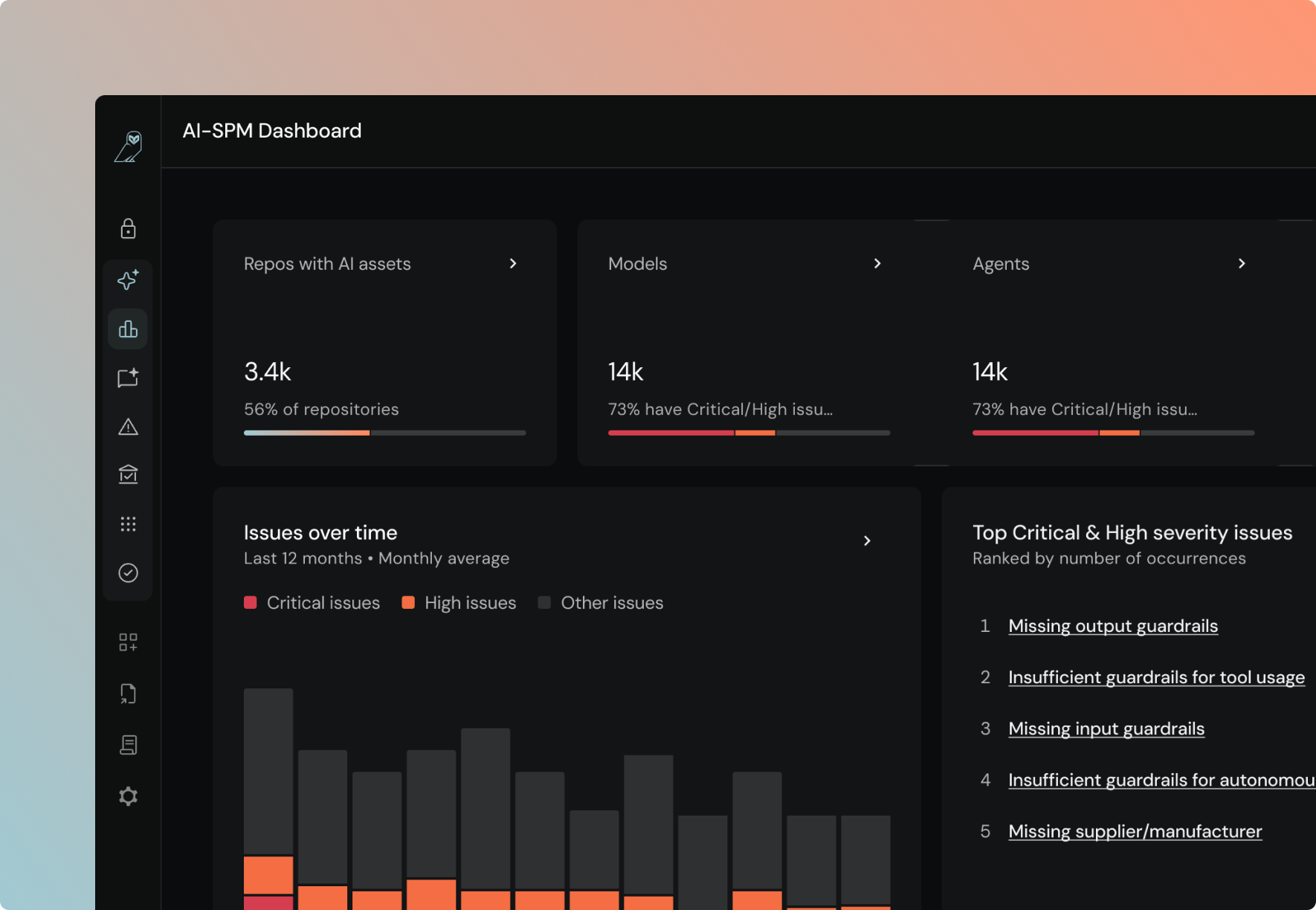
Dashboard showing AI asset repositories, models, agents, MCP servers, a bar chart of AI issues over the last 12 months, and top critical and high severity AI issues.

Context-aware risk assessments

Deep context of what your AI risk is, where it lives, and how it impacts your organization. Detect threats like model serialization attacks, instantly separating safe models from liabilities.

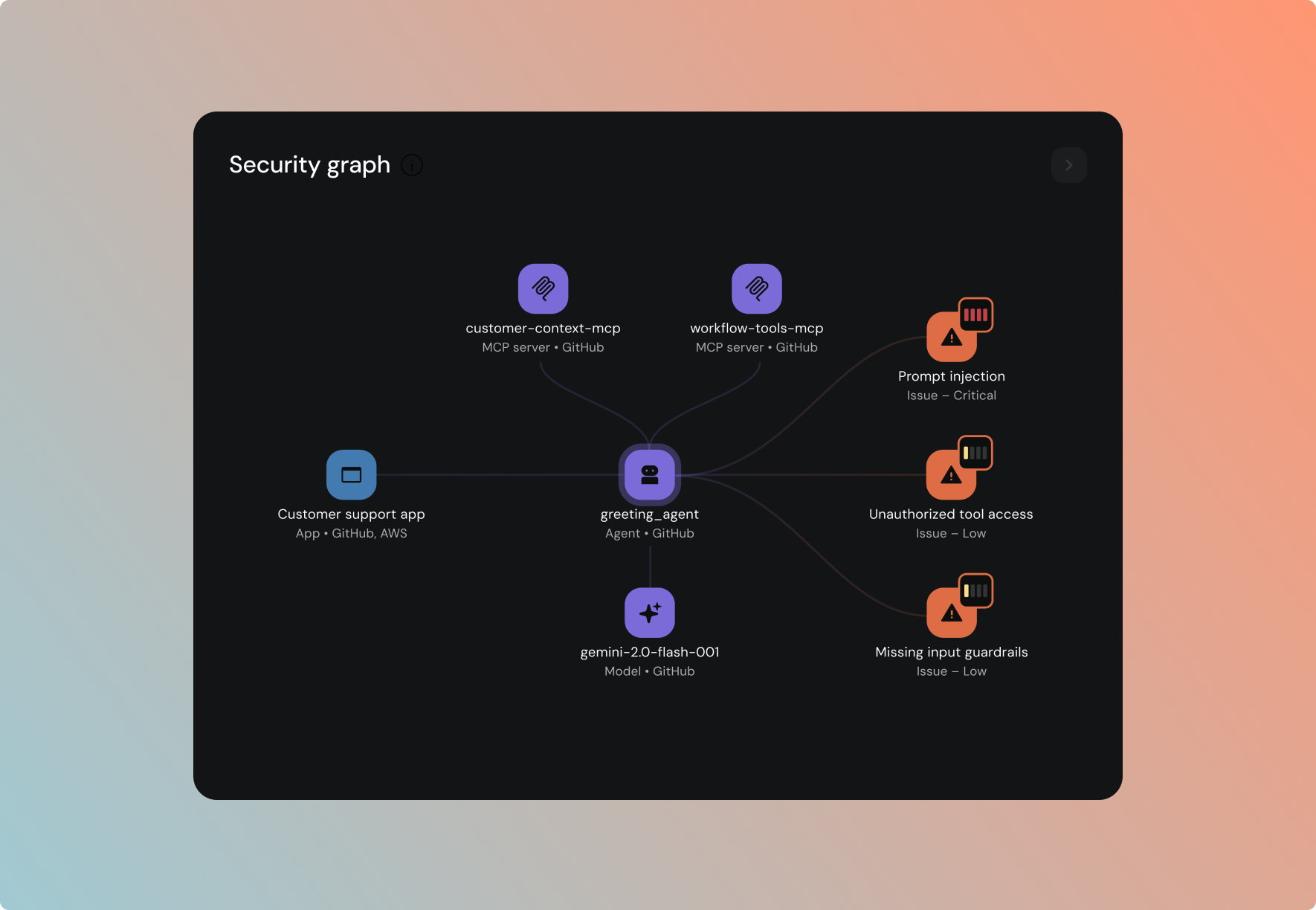
User interface showing risk overview for ScanMe/Models with a low risk score of 24 and detailed issue bars for jailbreaks, misuse, toxicity, security, and robustness, alongside a model connection diagram highlighting critical serialization issues and a GitHub repository.

Active protection at runtime

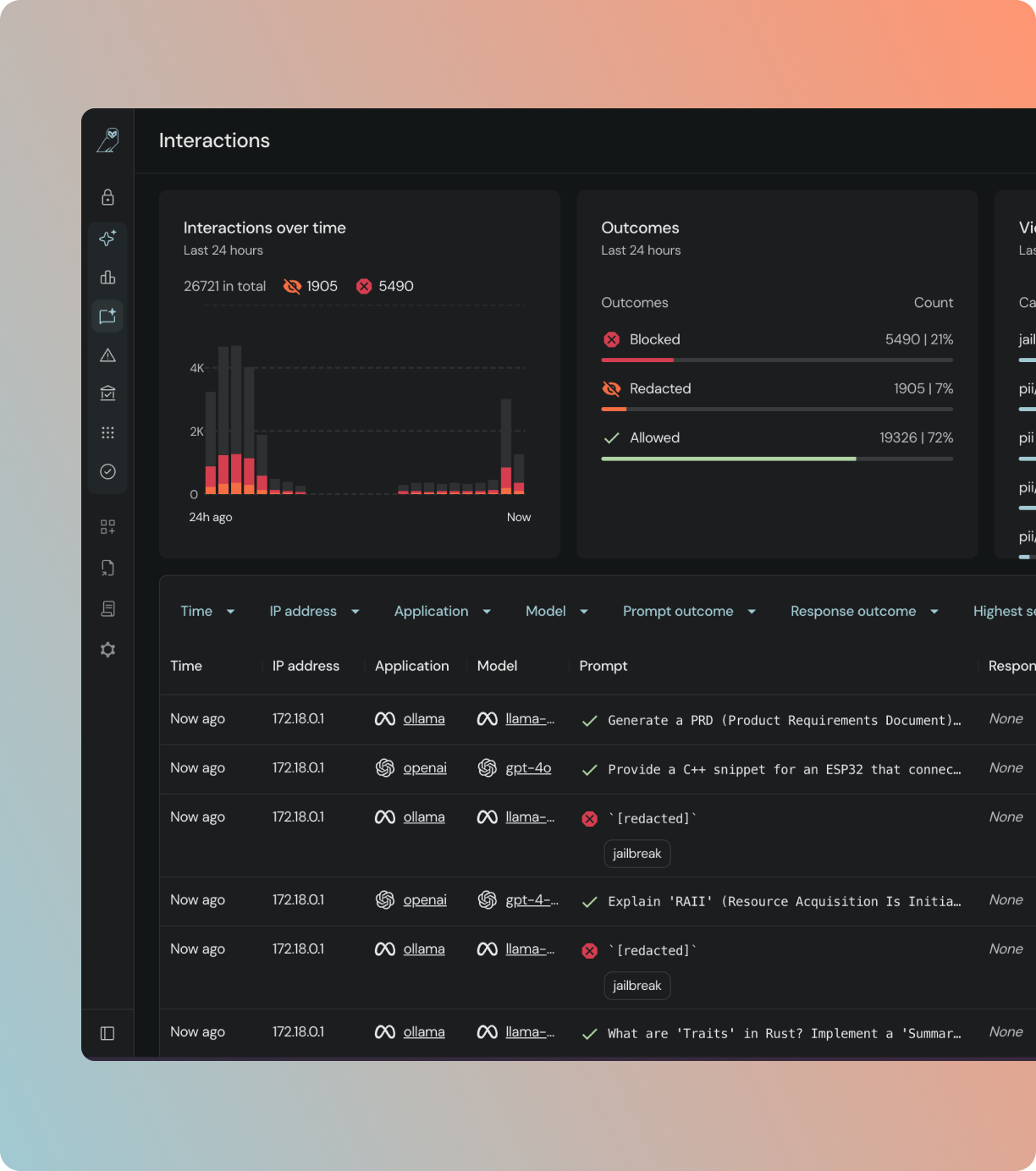
Stop unsafe AI inputs and outputs in real time. Enforce guardrails on AI applications, blocking risky behaviors and unsafe actions.

AQtive Guard AI-SPM dashboard showing active runtime protection

Policy-driven governance

Automate and validate compliance. Continuously verify AI posture against frameworks like EU AI Act or NIST and enforce internal mandates.

Dashboard showing EU AI Act report with a compliance score of 47, 8 requirements completed, 3 failed, and 9 not covered, plus a section on EU AI Ethical Principles.

Secure your AI assets

Hugging Face logoGoogle logoMicrosoft logoOpenAI logoAnthropic logoLangChain logoFastAPI logoAutogenAI logoFastMCP logo

Inventory & discovery

Deep discovery. Inventory models, agents, MCP servers across your environments. 
Table showing AI models with columns for name, supplier, model type, model health score, data sources, and risk level, listing models from DeepSeek, Meta, Stability AI, Google, Anthropic, and OpenAI with varying health scores and risk categories.

AI security posture insights

Visualize risk. View usage trends, aggregated risk scores, and security posture changes in one pane.
Dashboard showing AI asset stats including 128 repos (56% with AI assets), 2.3k models (73% critical/high issues), 672 agents (24% critical/high issues), and 72 MCP servers (3% critical/high issues). Bar chart displays AI issues over 12 months by severity. A list ranks top critical/high severity issues by occurrences, led by missing output guardrails with 842 issues.

Risk assessment

Correlate findings across the entire stack to prioritize the risks that actually matter. Deep dive into lineage, code, and models.
Dashboard for ScanMe/Models showing a risk score of 24 labeled low, with bar indicators for Jailbreaks, Misuse, Toxicity, Security, and Robustness, plus a graph linking ScanMe/Models to a critical model serialization issue and a GitHub sandbox/test repository.

Guardrails & runtime protection

Real-time detection of jailbreaks, sensitive data exposure, and unsafe AI responses. Proactively stop active attacks.
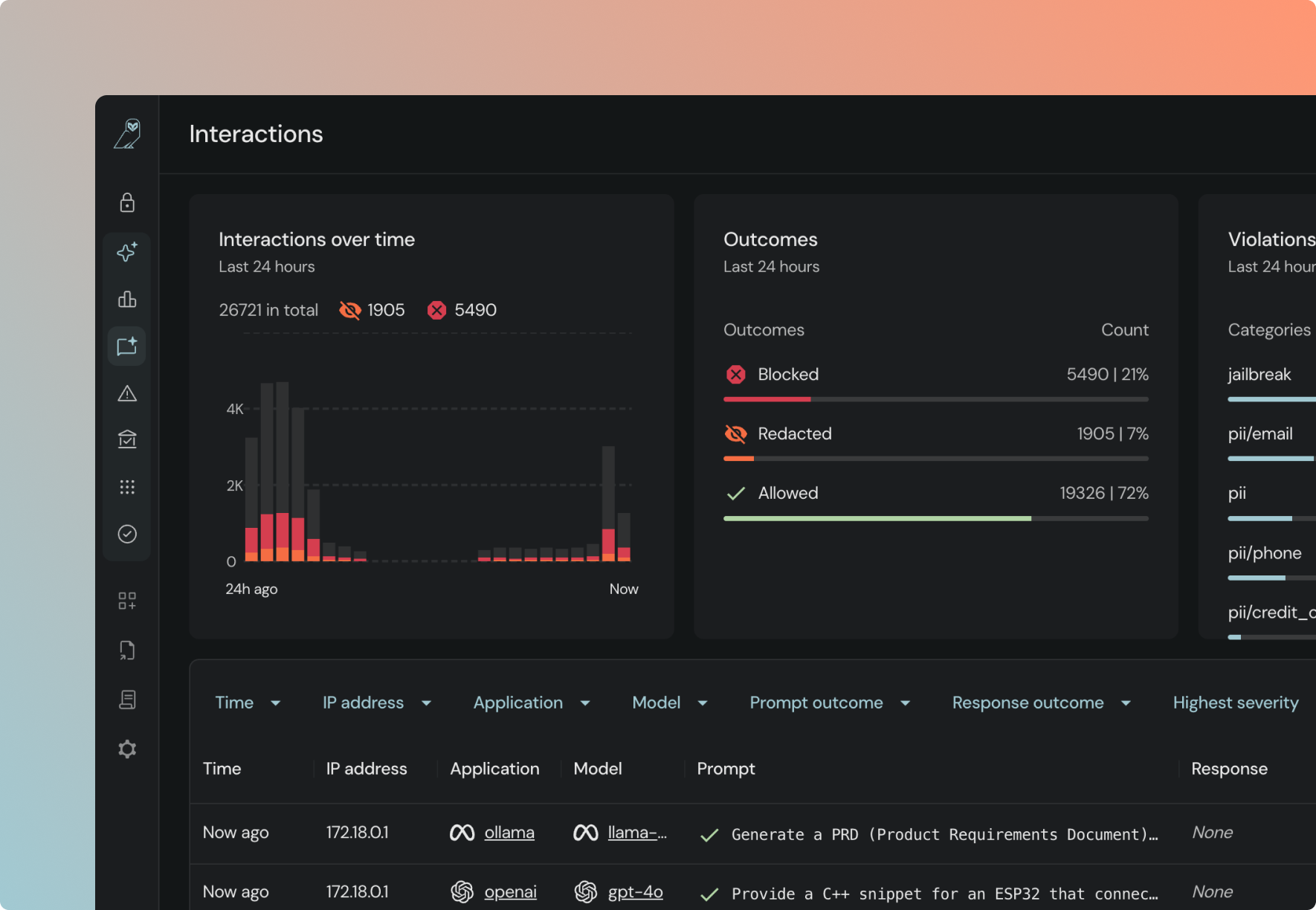
Dashboard showing total messages versus flagged with 223 total messages and 52 critical/high severity issues making 23%, plus interaction logs with timestamps, model names, issue types, severities, and content snippets.

CI/CD integrations

Scan code in pull requests. Automate security gates at the earliest stage of development.
Screenshot showing a code pipeline error stating 'AQG / AISPM: blacklisted model used' with a snippet of Python code importing pipeline from transformers and creating a text-generation pipeline using the blacklisted model 'deepseek-ai/DeepSeek-V3.2'.

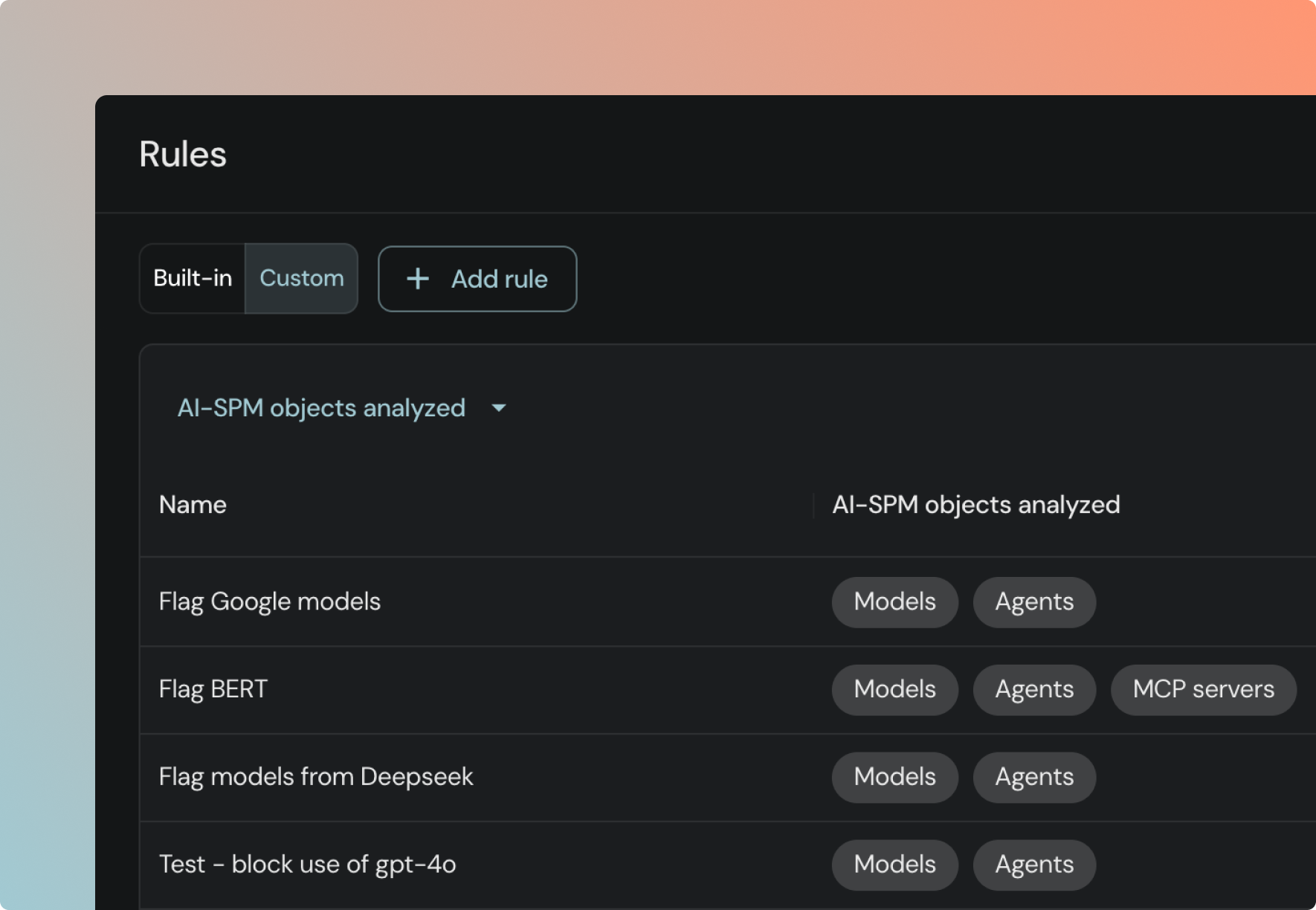
Custom policy & rule builder

Build custom rules to enforce policy and governance across your AI assets.
User interface displaying a custom rule creation form with fields for rule name 'Critical production jailbreak risk', optional description, severity set to critical, asset analyzed as Models, and conditions based on jailbreak score and environment settings.

Compliance reports

Automate report creation for stakeholders and external audits – from EU AI Act and NIST to OWASP.
EU AI Act report showing a compliance overview with a compliance score of 47, including 8 requirements completed, 3 failed, and 9 not covered.
Table showing AI models with columns for name, supplier, model type, model health score, data sources, and risk level, listing models from DeepSeek, Meta, Stability AI, Google, Anthropic, and OpenAI with varying health scores and risk categories.

Inventory & discovery

Deep discovery. Inventory models, agents, MCP servers across your environments. 
Dashboard showing AI asset stats including 128 repos (56% with AI assets), 2.3k models (73% critical/high issues), 672 agents (24% critical/high issues), and 72 MCP servers (3% critical/high issues). Bar chart displays AI issues over 12 months by severity. A list ranks top critical/high severity issues by occurrences, led by missing output guardrails with 842 issues.

AI security posture insights

Visualize risk. View usage trends, aggregated risk scores, and security posture changes in one pane.
Dashboard for ScanMe/Models showing a risk score of 24 labeled low, with bar indicators for Jailbreaks, Misuse, Toxicity, Security, and Robustness, plus a graph linking ScanMe/Models to a critical model serialization issue and a GitHub sandbox/test repository.

Risk assessment

Correlate findings across the entire stack to prioritize the risks that actually matter. Deep dive into lineage, code, and models.
Dashboard showing total messages versus flagged with 223 total messages and 52 critical/high severity issues making 23%, plus interaction logs with timestamps, model names, issue types, severities, and content snippets.

Guardrails & runtime protection

Real-time detection of jailbreaks, sensitive data exposure, and unsafe AI responses. Proactively stop active attacks.
Screenshot showing a code pipeline error stating 'AQG / AISPM: blacklisted model used' with a snippet of Python code importing pipeline from transformers and creating a text-generation pipeline using the blacklisted model 'deepseek-ai/DeepSeek-V3.2'.

CI/CD integrations 

Scan code in pull requests. Automate security gates at the earliest stage of development.
User interface displaying a custom rule creation form with fields for rule name 'Critical production jailbreak risk', optional description, severity set to critical, asset analyzed as Models, and conditions based on jailbreak score and environment settings.

Custom policy & rule builder

Build custom rules to enforce policy and governance across your AI assets.
EU AI Act report showing a compliance overview with a compliance score of 47, including 8 requirements completed, 3 failed, and 9 not covered.

Compliance reports

Automate report creation for stakeholders and external audits – from EU AI Act and NIST to OWASP.  

Secure your AI assets and ship AI securely

Gradient background transitioning from warm beige on the left to bright sky blue on the right.